A HIPAA audit rarely begins with a dramatic breach. More often, it starts with an ordinary request: show us who can access protected health information, how you assess risk, and what happens when a laptop disappears. To prepare systems for HIPAA audit, your organization needs more than a folder of policies and a last-minute spreadsheet. You need controls that are actually working, plus evidence that proves they have been working.
For Metro Atlanta practices and healthcare-adjacent organizations, the hard part is usually not buying another security tool. It is knowing where patient information lives, who touches it, which vendors can reach it, and whether the written policy matches day-to-day behavior. An auditor can spot that disconnect quickly.
Start With the Systems That Touch PHI
Do not begin with the network diagram you wish you had. Begin with the real workflow. Follow patient information from intake through billing, messaging, storage, referral, backup, and disposal. Electronic protected health information, or ePHI, may exist in the EHR, email, scanned documents, cloud drives, VoIP recordings, laptops, printers, patient portals, and third-party billing platforms.
Build a current inventory of the devices, applications, users, locations, and vendors involved. Include personally owned devices if staff use them for work. Include remote access methods. Include the old workstation in the back office that still runs a critical scanner application. These overlooked systems are where audit problems often start.
A useful inventory answers plain questions: What is this system for? Does it create, receive, maintain, or transmit ePHI? Who owns it? Who administers it? How is it protected and backed up? If no one can answer those questions, the system is not audit-ready.
Perform a Real Risk Analysis
HIPAA requires a risk analysis, not a generic checklist marked complete once a year. The analysis should identify where ePHI is located, credible threats to its confidentiality, integrity, and availability, existing safeguards, and the remaining risk.
That means considering practical scenarios: a phishing email captures a user password; an unpatched server is compromised; a departing employee retains access; a cloud vendor changes a setting; a storm takes out the office internet connection; or a backup cannot be restored. Rate the likelihood and impact, then document what you will do about unacceptable risk.
Perfection is not the standard. A small practice cannot operate like a hospital system with a full security department. But a risk you identify and deliberately address is very different from a risk you never examined. Keep the analysis current when you add software, move offices, change vendors, experience an incident, or materially change how staff work.
Prepare Systems for HIPAA Audit With Access Controls
Most access failures are not sophisticated hacks. They are shared logins, former employees still enabled, excessive permissions, and staff using whatever account is convenient. Each person who accesses ePHI should have a unique user ID, access appropriate to their job, and no more.
Review user accounts across your EHR, Microsoft 365 or Google Workspace environment, file storage, remote access platform, firewall, and line-of-business applications. Compare those accounts to the current employee and contractor roster. Disable access promptly when someone leaves or changes roles. Do not assume HR told IT, or that a manager removed a user from every system.
Multi-factor authentication should protect email, remote access, administrative accounts, cloud storage, and any system that supports it. There can be limited exceptions for older applications, but an exception needs compensating controls and a documented plan. Saying an application is too old for MFA is not a security strategy.
Auditors may also ask whether activity can be traced. Turn on audit logging in systems that hold ePHI, retain logs for a reasonable period, and review alerts that signal suspicious behavior. Logging everything without anyone checking it is only slightly better than logging nothing.
Close the Everyday Security Gaps
HIPAA safeguards are administrative, physical, and technical. A clean policy binder does not make up for unmanaged computers, missing patches, or an open server closet.
Your technical baseline should include managed endpoint protection, timely operating-system and application patching, encrypted laptops and mobile devices, secure firewall configuration, filtered email, and protected remote access. Establish a patch process with accountability. Some updates can break specialized medical or practice software, so testing and a documented maintenance window may be appropriate. The trade-off is real, but leaving known vulnerabilities open indefinitely is worse.
Physical safeguards deserve the same attention. Position screens so visitors cannot read patient information. Secure network equipment and paper records. Configure printers and copiers thoughtfully, especially if scanned documents are saved locally or print jobs sit unattended. If staff work remotely, establish rules for private workspaces, screen locking, device transport, and home Wi-Fi.
Training should be specific enough to change behavior. Staff need to recognize suspicious email, verify unusual payment or records requests, report lost devices immediately, and understand why sharing credentials is not acceptable. Document attendance and repeat training regularly. A staff member who reports a mistake quickly gives you options. A staff member who is afraid to report it can turn a small incident into a reportable breach.
Test Backups and Your Ability to Recover
Availability is part of HIPAA. If ransomware encrypts your shared drive or a failed update takes down the EHR connection, can the organization continue serving patients and recover accurate records?
Backups should be encrypted, monitored, protected from easy alteration, and separated enough that a single compromised administrator account cannot erase both production data and every backup copy. The exact design depends on your environment, data volume, recovery goals, and budget. What does not depend on budget is testing.
A successful backup job only proves data was copied somewhere. It does not prove you can restore the right file, server, or application within a useful timeframe. Run restoration tests, record the results, and fix what fails. Also maintain a written contingency plan covering system outages, emergency operations, data restoration, communications, and post-event review.
Put Vendors Under the Same Microscope
A surprising amount of ePHI moves through organizations outside your office. Billing firms, managed IT providers, cloud storage companies, patient communication platforms, document shredders, and software vendors may all be business associates depending on what they handle and how they access it.
Maintain a vendor list, identify which vendors handle ePHI, and confirm that appropriate business associate agreements are in place where required. A BAA is not a substitute for vetting a vendor’s security practices, but it is a critical part of the relationship.
Review contracts and access regularly. Ask whether the vendor needs ongoing administrative access, where data is stored, what happens at contract termination, and how the vendor will notify you of a security incident. If a vendor cannot give a clear answer, do not let convenience make the decision for you.
Build an Evidence File Before Anyone Asks
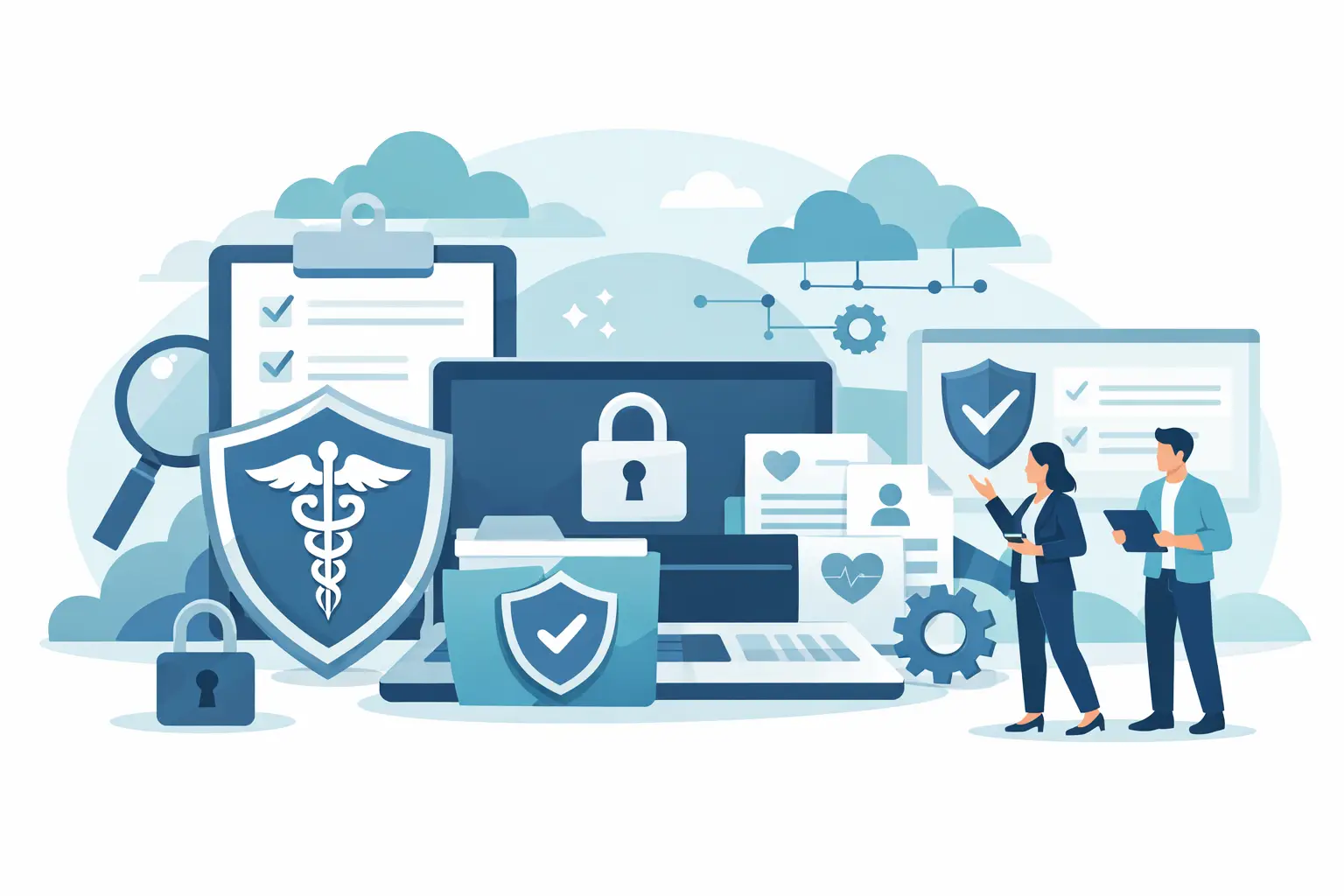
An audit is partly a test of your controls and partly a test of your ability to demonstrate them. Create a structured evidence file and update it as part of normal operations. It should contain your risk analysis and remediation plan, current policies, training records, access reviews, asset inventory, patch and endpoint reports, backup test results, incident documentation, vendor list, and applicable BAAs.
Do not manufacture records after receiving an audit notice. Late documentation often exposes the fact that a process was not operating. Instead, assign an owner for each evidence category and set a recurring review schedule. An office manager may own training records while IT owns vulnerability reports and access logs. What matters is that responsibility is clear.
If you have internal IT, give them time and authority to close documented gaps. If you rely on outside support, expect that provider to explain findings in plain English, show the work completed, and tell you what remains. 404 Network Ninjas approaches this as disciplined maintenance, not a compliance theater project.
Treat Readiness as an Operating Habit
There is no universally recognized HIPAA certification that makes future audits disappear. Requirements can also vary based on contracts, state obligations, insurer expectations, and the systems your organization uses. The goal is not to make your environment look impressive for one week. It is to make sensible security and documentation routine.
Start with the systems holding the most sensitive information and the weaknesses most likely to disrupt care or expose records. Fix those, document the decision, test the result, and keep moving. When an auditor asks for proof, calm preparation is far more useful than a frantic search through old email.