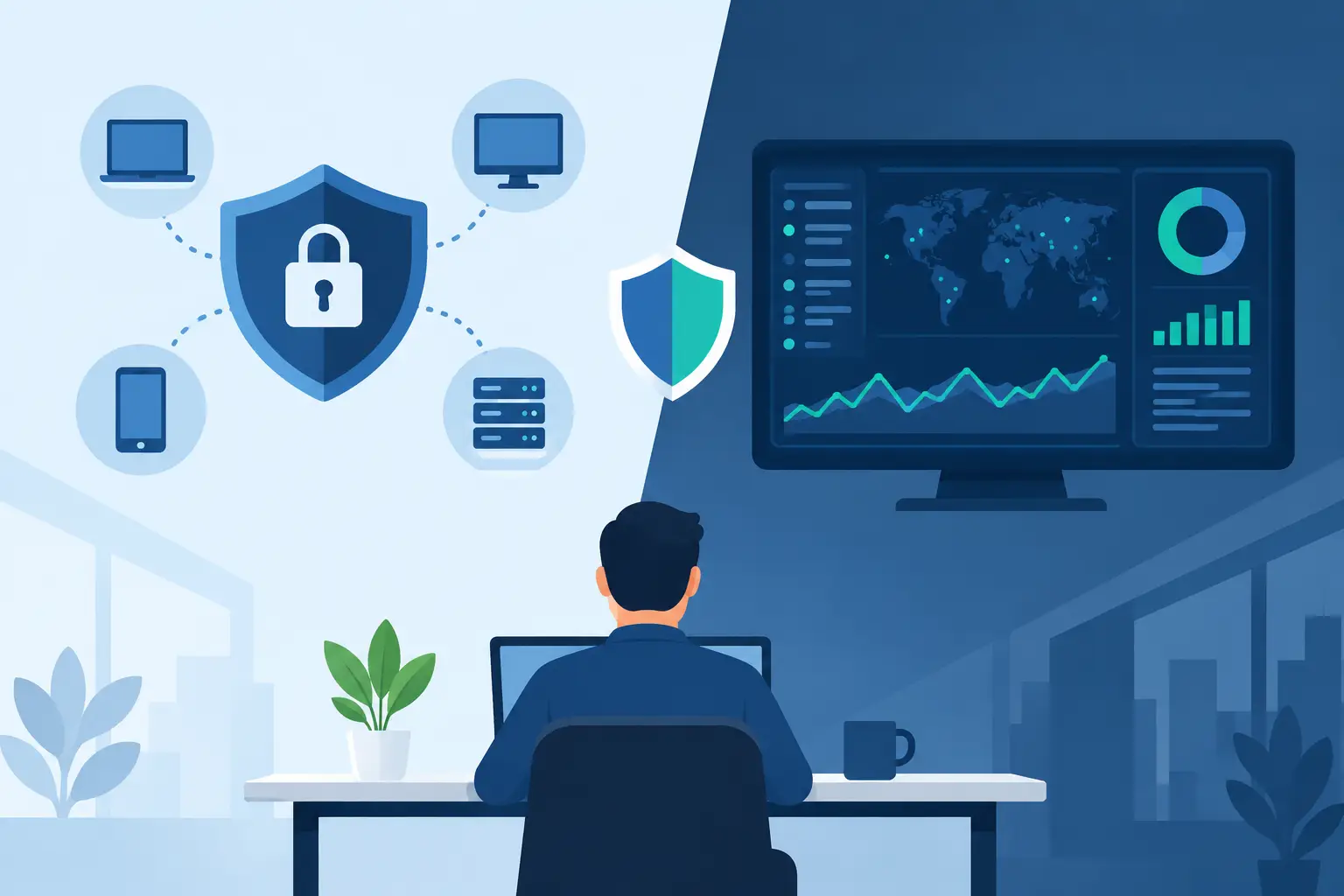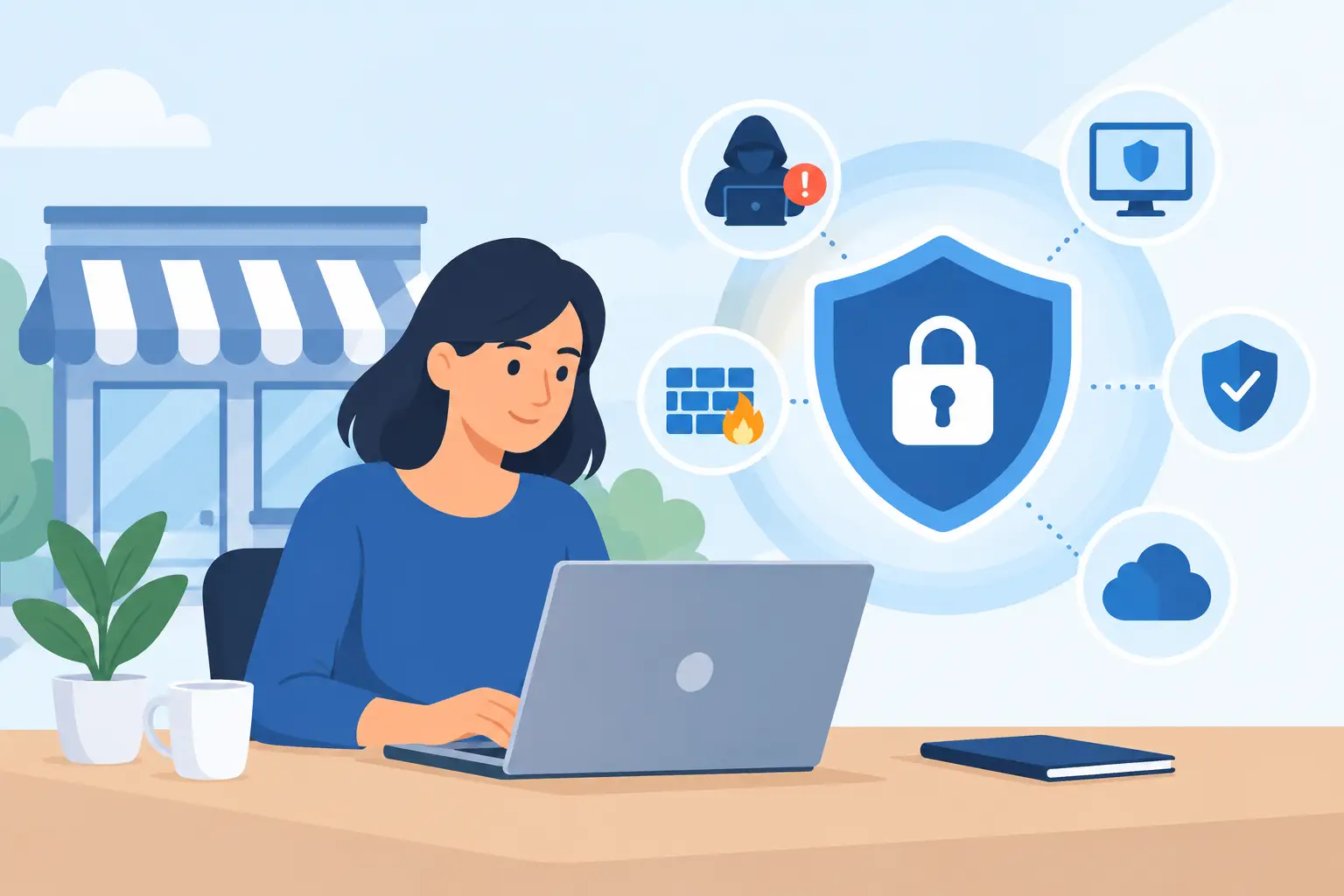
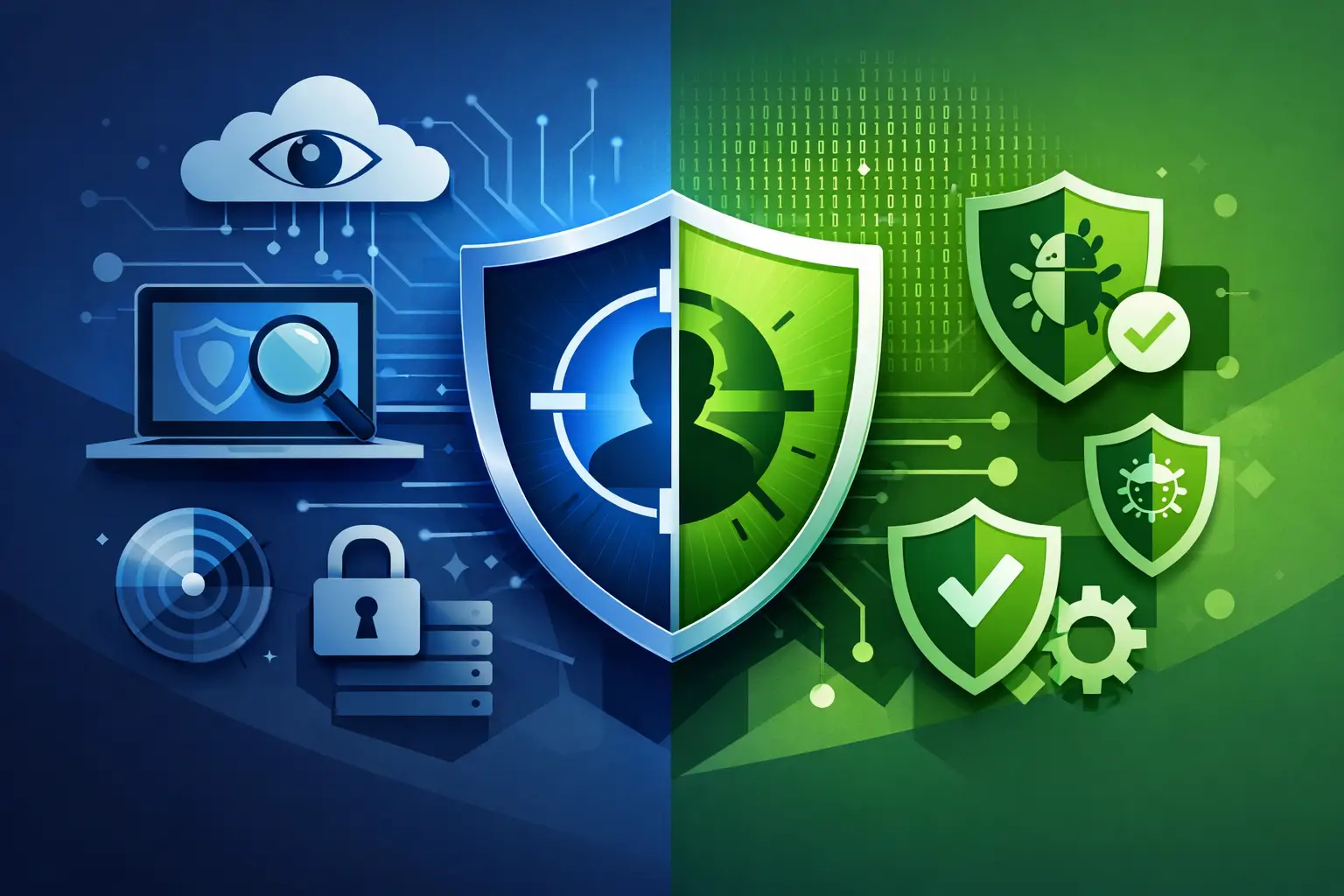
A suspicious email lands in a staff member’s inbox at 8:42 a.m. By 9:10, their computer is quietly sending login credentials to an attacker. The question in EDR versus antivirus software is not which product has the flashier dashboard. It is whether your business can spot, contain, and investigate that kind of activity before it becomes a ransomware event, client-notification problem, or very bad Monday.
For many small and midsize organizations, traditional antivirus remains part of the answer. It is not the whole answer. EDR adds visibility and response capabilities that antivirus alone was never built to provide. The right choice depends on your risks, staff, systems, and who will actually respond when an alert appears.
EDR versus antivirus software: the practical difference
Antivirus is primarily designed to prevent known malicious software from running on a device. It scans files, compares them against known threat signatures, and uses behavior-based detection to block suspicious activity. Modern antivirus is much better than the old software that simply checked files once a day. Many products now use cloud intelligence, web filtering, and machine-learning detection.
That said, antivirus generally answers a narrow question: “Is this file or activity likely malicious right now?” If the answer is yes, it tries to block or quarantine it.
Endpoint detection and response, usually called EDR, takes a broader view. It continuously records security-relevant activity on workstations and servers: processes that start, PowerShell commands, unusual logins, file changes, network connections, and attempts to disable security tools. When behavior looks dangerous, EDR can alert a security team, isolate the affected device, and provide evidence for an investigation.
Think of antivirus as the lock on the door. EDR is the camera system, access log, alarm, and ability to lock down a room after someone gets through a window. You need locks. But if a determined intruder finds another route, you also need to know what happened and limit the damage.
Where antivirus still earns its place
Antivirus is not obsolete, and any provider claiming otherwise is trying too hard to sell you something. A properly managed, next-generation antivirus product can stop a large share of common threats, including known malware, malicious downloads, and many phishing-delivered payloads.
It is also usually less expensive and simpler to deploy than a full EDR program. For a very small organization with a limited number of devices, no sensitive records, and a tight budget, managed antivirus may be an appropriate starting point. That is especially true if it is paired with patching, multifactor authentication, reliable backups, and security awareness training.
The problem is that antivirus cannot guarantee it will recognize every attack. Criminal groups routinely change malware, abuse legitimate administrative tools, steal valid credentials, and move through cloud applications where no suspicious file ever lands on a computer. If an attacker signs in with a real employee’s password, basic antivirus may have little to see.
What EDR adds when an incident gets complicated
EDR is built for the messy middle of a cyber incident: the period after something suspicious happens but before you know its full scope. Rather than offering only a blocked-or-allowed decision, it gives responders context.
For example, an EDR record may show that a user opened a fake invoice, a script launched from their downloads folder, the script created a new scheduled task, and the device began connecting to an unfamiliar internet address. A technician can trace that sequence, identify other endpoints showing the same behavior, and isolate the affected machine from the network while preserving evidence.
That capability matters because ransomware attacks are rarely a single-file problem. Attackers often spend days or weeks exploring the network, collecting credentials, locating backups, and identifying valuable data before they encrypt anything. EDR can expose signs of that activity earlier, including unusual administrative tools, repeated failed logins, or attempts to turn off endpoint protection.
EDR can also support recovery after a close call. If a law firm needs to determine whether client files were accessed, or a healthcare-adjacent practice needs to understand whether protected information may have been exposed, logs and endpoint telemetry are far more useful than a vague message saying that antivirus removed a threat.
EDR does not replace the people and processes behind it
Here is the part software vendors tend to minimize: EDR creates alerts, and alerts need decisions. Some are harmless. Some are early warnings. Some require immediate action, such as isolating a computer that belongs to the person processing payroll.
An unmanaged EDR tool can become another expensive console nobody checks until an insurance application, audit, or breach forces the issue. Small organizations do not need a wall full of blinking security screens. They need a defined process for monitoring, escalation, response, documentation, and communication.
A managed EDR service typically means security specialists review alerts, investigate suspicious behavior, and take approved containment actions. The exact arrangement matters. Ask whether monitoring is available around the clock, who can isolate a device, how the provider contacts your team after hours, and what happens if an alert involves a server or executive laptop. “We install EDR” is not the same as “we respond when it detects an active threat.”
Choosing the right level of endpoint protection
The best decision starts with operational risk, not a checklist copied from a vendor proposal. A nonprofit with mostly cloud-based tools and limited donor information has different exposure than a law firm handling confidential case files or a medical practice supporting HIPAA-regulated workflows.
EDR deserves serious consideration when your organization has sensitive client, financial, employee, legal, or health-related information; remote or hybrid staff; servers that support daily operations; cyber insurance requirements; or a real financial cost when systems go down. It is also a practical fit when leadership knows a rapid response would be difficult without outside help.
Antivirus may be enough as an interim baseline when the environment is very small and low risk, provided it is centrally managed and supported by the fundamentals. Those fundamentals include prompt patching, multifactor authentication, tested backups, restricted administrator access, and clear procedures for reporting suspicious messages. Skipping those controls while buying EDR is like installing a high-end alarm system while leaving the side door unlocked.
For many Metro Atlanta businesses, the sensible answer is layered protection: managed next-generation antivirus or EDR, email security, identity protection, patch management, backup verification, and a response plan that names actual people. The technology should match the business, not force the business into an enterprise security package it cannot operate or afford.
Questions to ask before you buy
Before comparing product names, ask a prospective IT provider to explain the day-to-day service in plain English. You should know whether every workstation and server is covered, how quickly security alerts are reviewed, and whether the service includes active containment or only notifications.
Also ask what reporting you will receive. A useful report should show endpoint coverage, unresolved risks, patch status, meaningful incidents, and actions taken. It should not be a monthly pile of charts that tells you nothing about whether your organization is safer.
Finally, test the human side. If a device is isolated at 7 p.m., who calls whom? If an employee reports a suspicious file, can they reach a technician who understands your environment? At 404 Network Ninjas, that practical accountability is the point: assess the risk, fortify the weak spots, and sustain the controls instead of treating endpoint protection as a box to check.
The right endpoint tool is the one backed by people who will notice trouble, explain it clearly, and act before a suspicious login turns into an organization-wide emergency.