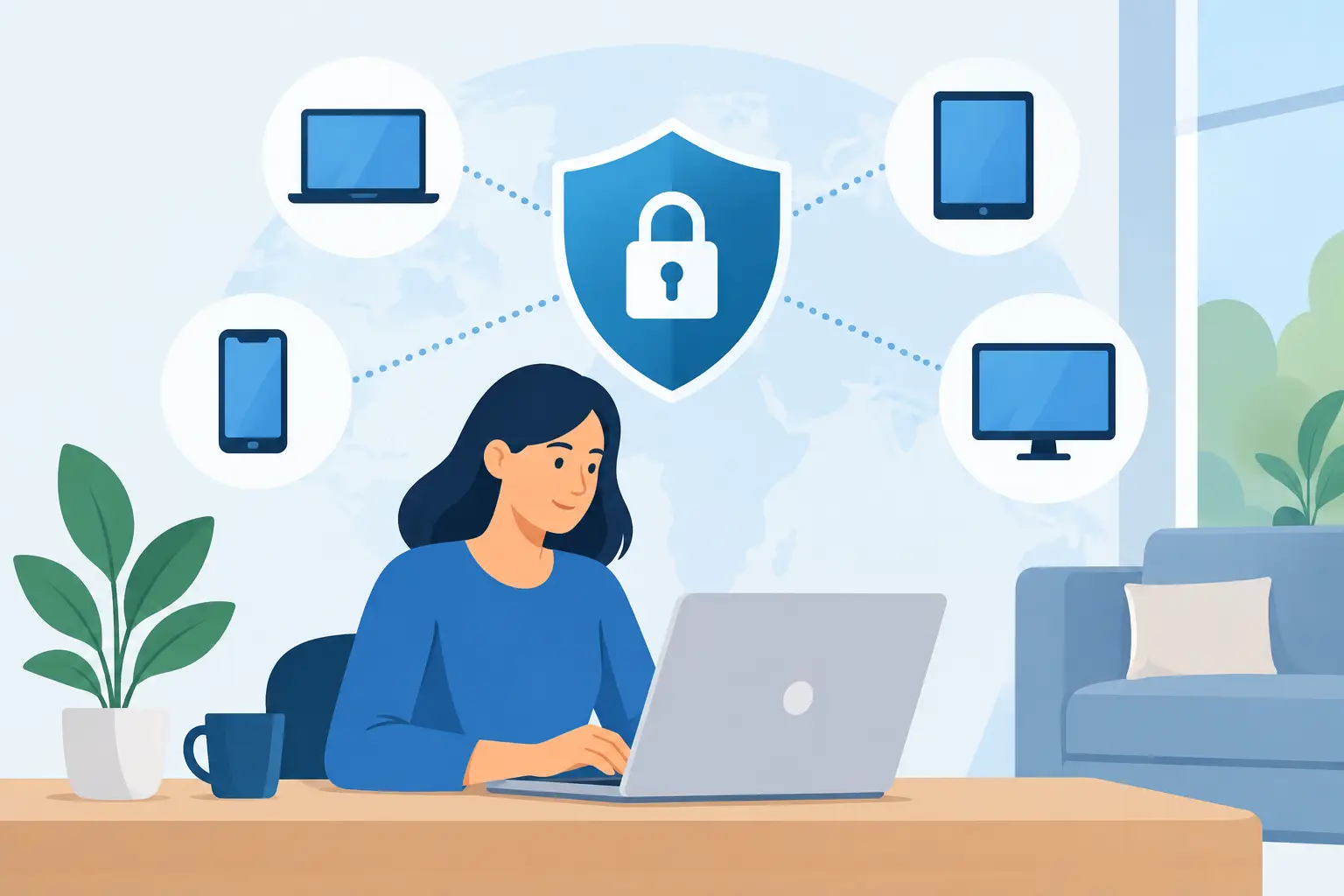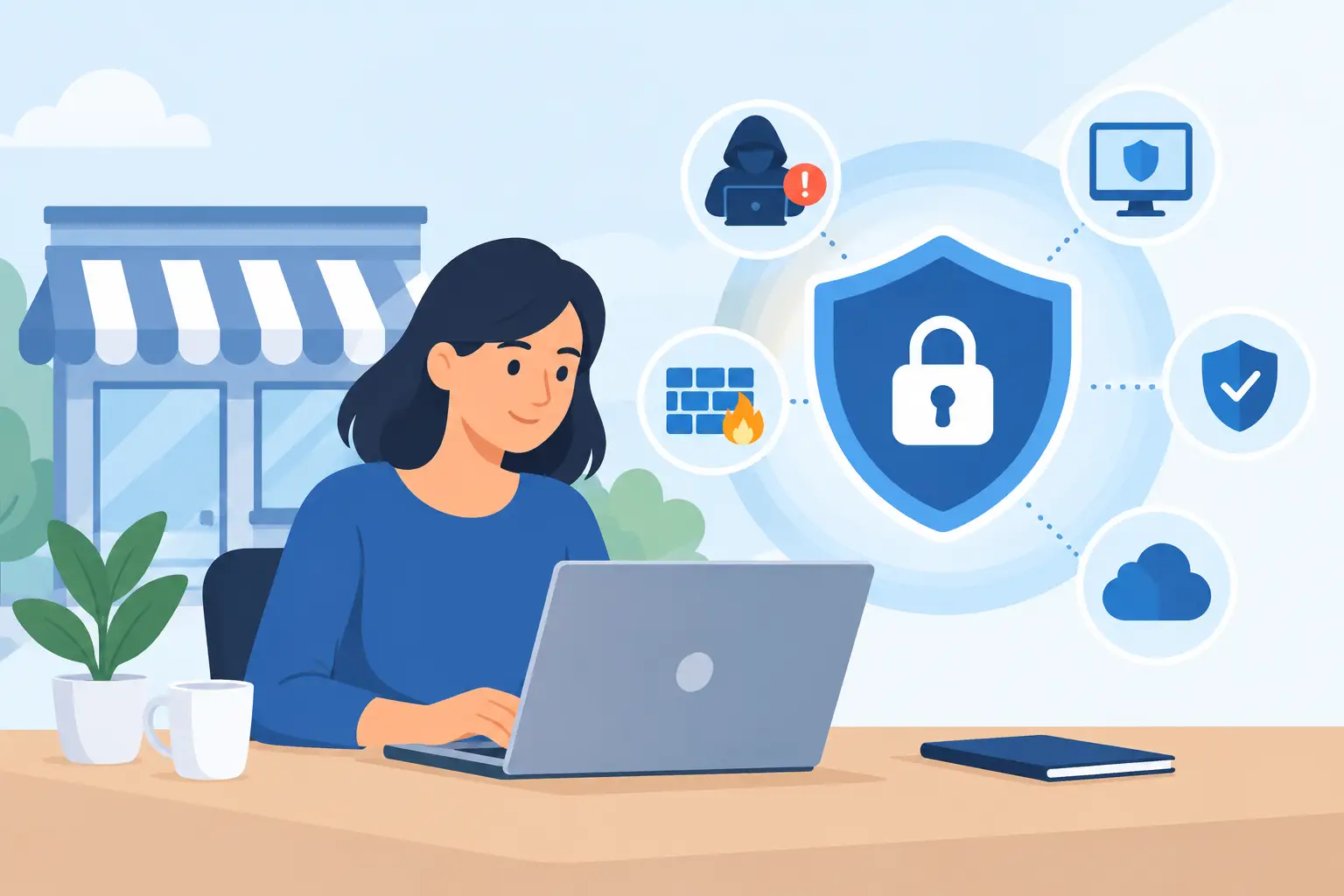
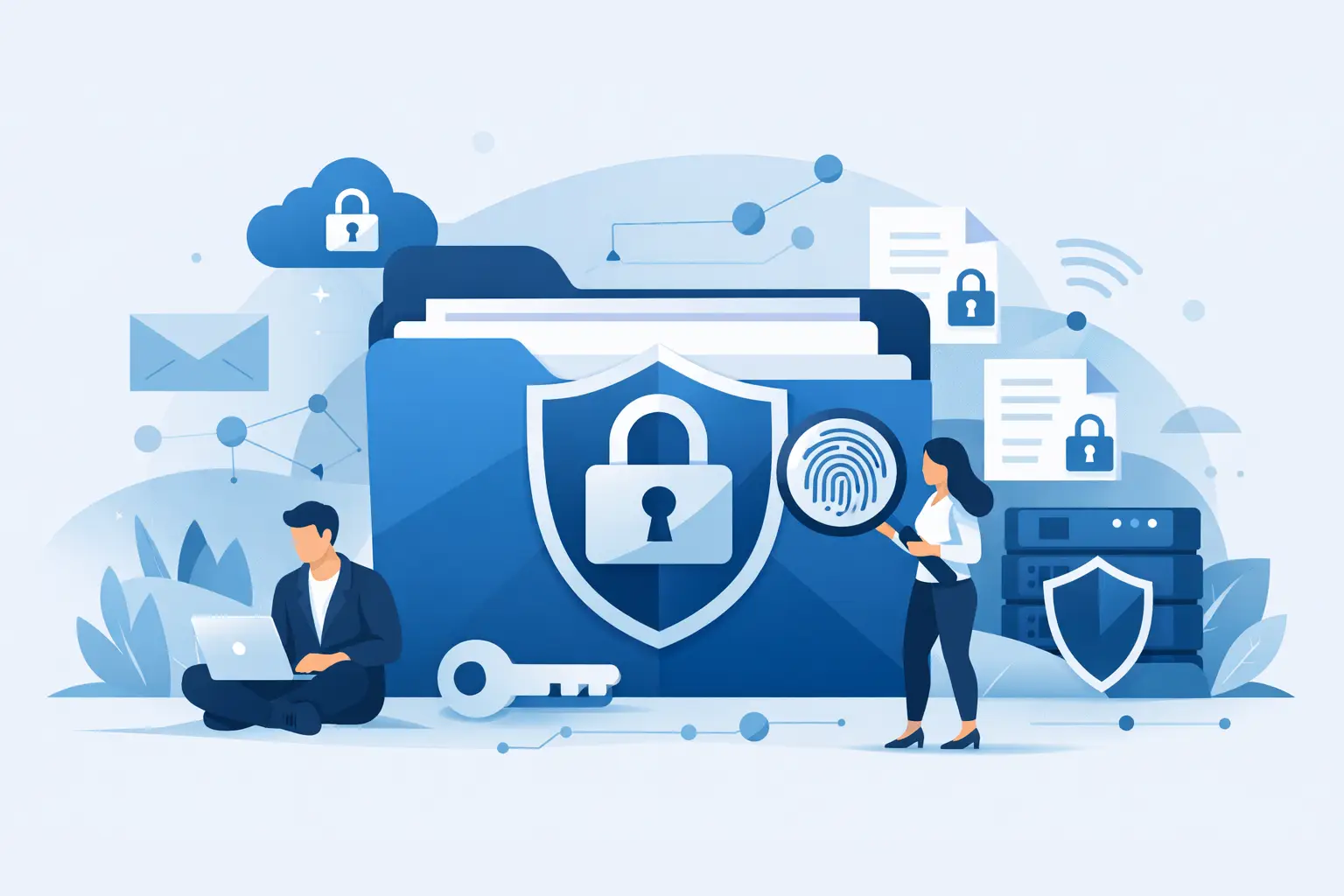
A misplaced laptop should not become a client-notification event. Neither should a staff member sending a file to the wrong recipient, an old backup drive left in a closet, or a criminal getting into an email account. The goal when you encrypt sensitive client data is simple: if the data leaves your control, it should still be unreadable to the wrong person.
For law firms, healthcare-adjacent practices, nonprofits, and growing professional organizations around Metro Atlanta, encryption is not a badge you earn by buying one security product. It is a set of practical controls around the places client information actually moves: laptops, email, cloud storage, phones, backups, and vendor systems. Get those controls right, and a lost device or intercepted file is far less likely to become a business crisis.
What Encryption Actually Protects
Encryption turns readable information into unreadable ciphertext that can only be opened with the correct key. It protects confidentiality when a device is stolen, a network connection is intercepted, or stored data is accessed outside approved systems.
That last phrase matters. Encryption does not stop an employee with legitimate access from downloading a client list. It does not fix an over-permissioned shared folder. It does not prevent a convincing phishing email from tricking someone into signing in and opening files for an attacker. Encryption works alongside identity controls, access permissions, multifactor authentication, security awareness, logging, and backups.
Small organizations often hear that their cloud platform is encrypted and assume the job is done. Major cloud services do encrypt much of their infrastructure, and that is useful. But the more important questions are operational: Who can access the files? Is multifactor authentication required? Can a former employee still sign in? Are confidential attachments being sent outside protected channels? Is a personal device syncing a copy of client records?
Encryption is one layer. It is a critical layer, but it needs competent administration behind it.
Where to Encrypt Sensitive Client Data First
Start with the systems that hold the most sensitive information and create the biggest operational exposure. Client matter files, medical or intake records, payment information, donor records, HR documents, legal correspondence, tax data, and authentication credentials all deserve attention. A useful assessment maps where those records are created, stored, transmitted, copied, and backed up.
Encrypt devices at rest
Every company-owned laptop should use full-disk encryption. If a laptop is lost at Hartsfield-Jackson, taken from a vehicle, or left behind at a conference, the files and browser data on that device should not be available to whoever finds it.
Full-disk encryption is strongest when paired with a managed user account, a strong sign-in method, automatic screen locking, and a way to remotely remove company data when necessary. It should also include recovery-key management. If the only person who knows how to recover an encrypted laptop leaves the organization, you have traded one risk for another.
Desktop computers and servers need the same review. Servers in a locked office are not automatically safe. A break-in, improper disposal, failed hardware, or an unauthorized technician can expose data stored on unencrypted drives.
Encrypt data in transit
Data in transit is information moving from one place to another. This includes someone signing into a business application, a receptionist sending an intake form, a lawyer sharing documents with a client, or a staff member connecting from home.
Secure websites and modern business applications generally use encrypted connections. The trouble starts when staff work around approved tools. Sending confidential files through regular email, uploading documents to a personal file-sharing account, or using an unapproved messaging app can bypass the protections your organization relies on.
For sensitive documents, use a secure file-sharing method that requires the recipient to authenticate or retrieve the file from a protected portal. Some email platforms can encrypt messages automatically when certain conditions are met, while others require the sender to choose the encrypted option. Either approach can work. The right choice depends on how frequently you exchange confidential information and how much friction your clients can reasonably handle.
If every message requires a complicated login, recipients may call your office frustrated or ask staff to resend the document without protection. If protection is optional and confusing, employees may skip it. The practical answer is clear rules, short training, and a tool that fits the way your people work.
Encrypt cloud storage and shared files
Cloud storage is convenient because it allows teams to work from different offices, homes, courtrooms, job sites, or client locations. It is also easy to misconfigure. A shared folder with a broad permission setting can expose more than an unencrypted local drive ever did.
Use approved cloud storage with encryption in transit and at rest, then limit access by role and client matter. Review external sharing regularly. Make sure sharing links expire when appropriate, and avoid settings that allow anyone with a link to access confidential material.
For law firms, this should include a close look at matter workspaces, document-management systems, and e-discovery exports. For medical and healthcare-adjacent organizations, review patient communications, scheduling platforms, and any vendor that handles protected health information. The question is not whether the vendor uses the word “secure.” The question is whether its controls match the sensitivity of the data and your contractual or compliance obligations.
Encrypt backups without making recovery impossible
Backups are often overlooked because they are supposed to stay in the background. They may contain nearly every file your organization owns, including years of client records. If a backup is stolen, improperly retired, or accessed through compromised credentials, it can create the same confidentiality problem as a production system.
Backups should be encrypted both while they are transmitted and while they are stored. They should also be protected by separate credentials and, where possible, immutability controls that make them harder for ransomware to alter or delete.
There is a trade-off here. Encryption keys and recovery credentials must be protected, but they cannot be so inaccessible that your organization cannot restore data during an emergency. Document who has authority to initiate a recovery, where recovery information is stored, and how that process is tested. A backup you have never restored is an assumption, not a recovery plan.
Key Management Is the Part Most Teams Miss
Encryption is only as reliable as the keys and recovery methods behind it. Think of a key as the thing that unlocks protected data. If it is stored carelessly, shared widely, or tied to one former employee’s account, the encryption control is weakened.
A sensible key-management approach does not need to feel like an enterprise bureaucracy. It does require discipline. Recovery keys should be stored in approved administrative systems, not in a spreadsheet on someone’s desktop. Access should be limited to the people who need it. Departing staff should lose access quickly. Administrative accounts should use multifactor authentication and should not be used for routine email or web browsing.
For especially sensitive environments, discuss whether customer-managed encryption keys are appropriate. They can provide more control, but they also create more responsibility. If your organization cannot reliably manage key rotation, recovery, staff changes, and incident procedures, a poorly managed advanced option may be riskier than a well-administered standard platform.
Build Encryption Into Daily Work, Not a Policy Binder
The best encryption plan is one employees can follow during a busy Tuesday afternoon. It should answer ordinary questions: Can I email this file? Where do I save it? How do I send it to a client? What do I do when I need to work from my phone? Who do I call if I sent something to the wrong person?
A practical rollout starts with an assessment, followed by risk-based fixes rather than a random shopping list. At minimum, verify these controls across your environment:
- Full-disk encryption is enabled and recoverable on company laptops and appropriate desktops.
- Multifactor authentication protects email, cloud storage, remote access, and administrative accounts.
- Sensitive files use approved sharing and encrypted email processes.
- Backup data is encrypted, isolated from everyday credentials, and tested for restoration.
- Access is removed promptly when staff, contractors, or vendors no longer need it.
Documentation matters here. Keep a record of which systems store sensitive data, which encryption settings apply, who administers them, and how exceptions are approved. This helps with HIPAA or SOC-related reviews, cyber-insurance questionnaires, client due diligence, and the far more urgent moment when someone reports a lost device.
Do Not Confuse Compliance Checkboxes With Protection
A compliance requirement may say encryption is required or addressable under certain circumstances, but the business decision is broader than passing an audit. If your organization collects information that could harm a client, embarrass the organization, trigger a reporting obligation, or affect a legal matter, treat that data accordingly.
That does not mean encrypting every file with a separate password and making work impossible. It means applying reasonable protection to the systems where meaningful risk exists. A public event flyer does not need the same handling as an employee W-2 or a confidential case file. Classifying information by sensitivity keeps the program realistic.
404 Network Ninjas approaches this work by looking at the actual environment first: where the data lives, how staff use it, which controls are missing, and what needs to be fixed before it becomes an incident. No grand digital-transformation speech. Just documented priorities, accountable ownership, and someone who answers the phone when a problem needs attention.
When client trust is part of your business, encryption should be quiet. Staff should not have to think about it every hour, but your organization should know it is there when a laptop disappears, a file is shared, or an auditor asks the hard questions.